
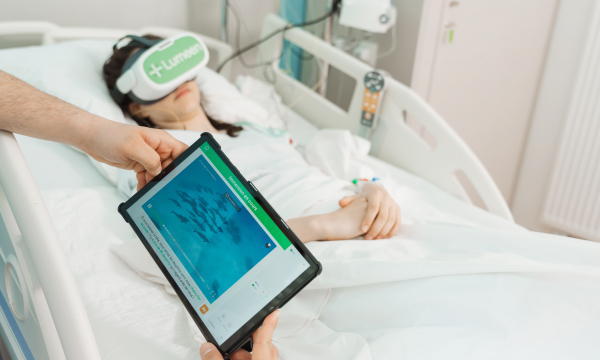
Virtual reality is an innovative, non-pharmacological approach used in addition to medical treatments to improve the care experience. It is now recognized as a Non-Pharmacological Intervention (NPI) by the Fondation Médéric Alzheimer and recommended by the French National Authority for Health (HAS). This device helps improve the comfort and quality of life of patients throughout their care pathway.
Like many healthcare facilities, the Centre Léon Bérard integrates virtual reality into its practices to help patients manage pain and anxiety related to medical care.
By offering an immersive and soothing approach, virtual reality provides patients with a moment of respite from the pain, stress, and apprehensions that can accompany certain stages of their care. Thanks to immersive visual and audio environments, virtual reality captures the patient's attention and promotes a state of deep relaxation. These 360° immersions allow patients to travel, discover natural landscapes, and experience true escapism, which helps reduce the perception of pain, decrease stress, and improve comfort during treatments. By focusing the mind on an immersive experience, virtual reality helps distract attention from painful sensations.
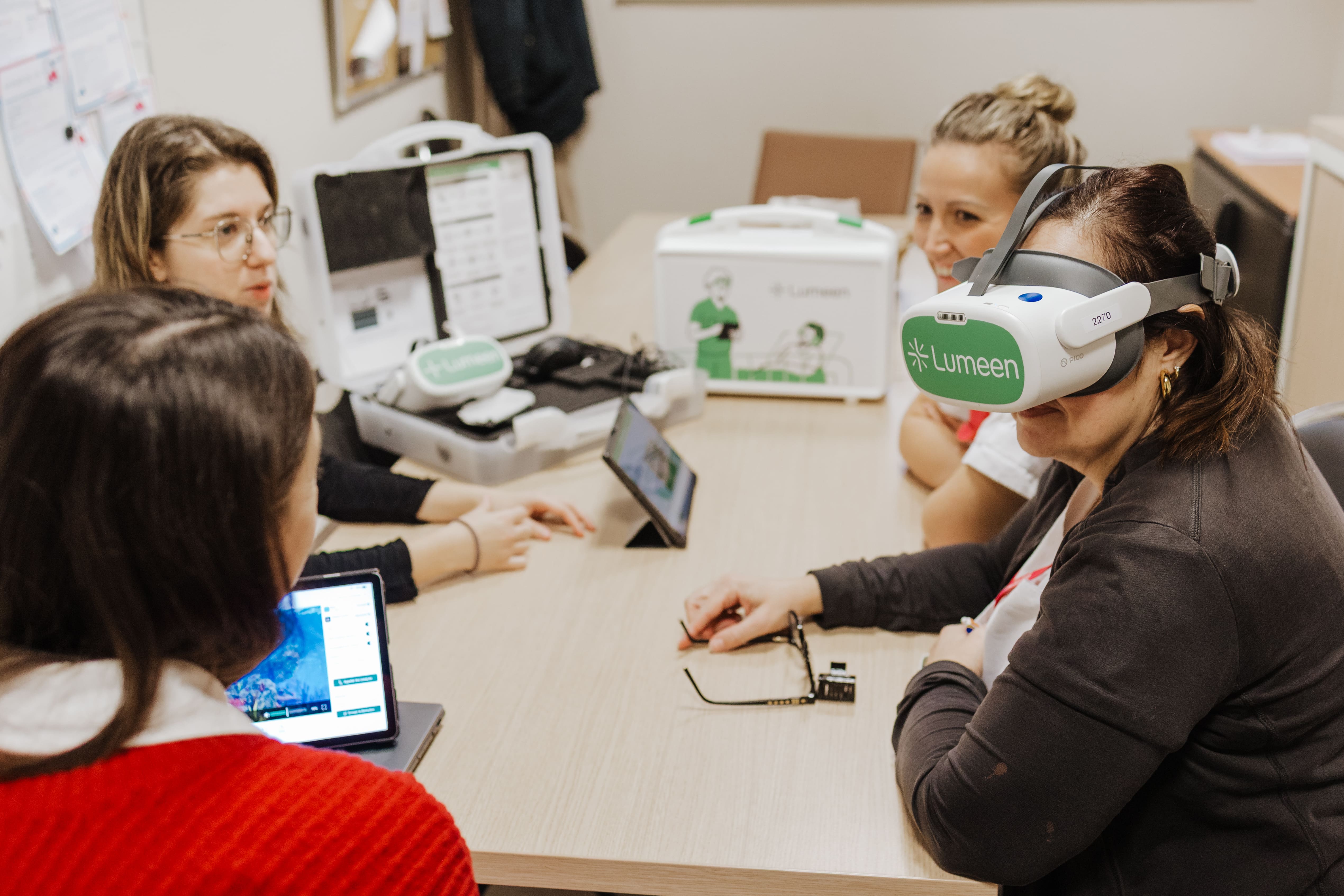
(c)Audace Studio
- Evaluation of the device
-
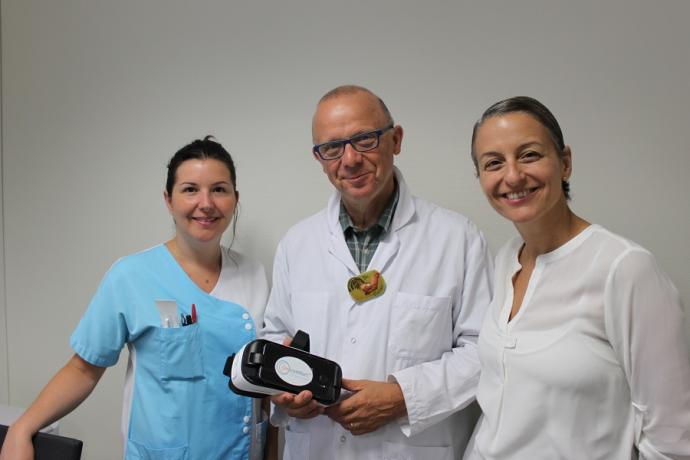
A fully involved healthcare team
Virtual reality is proposed by caregivers as part of individualized support, adapted to the needs and specific stage of each patient's care pathway. It can be offered just before surgery to reduce preoperative anxiety, or used as a mediation tool between patients, caregivers, and relatives (for example, in palliative care). It becomes a true support tool allowing for a more global and human approach.
-
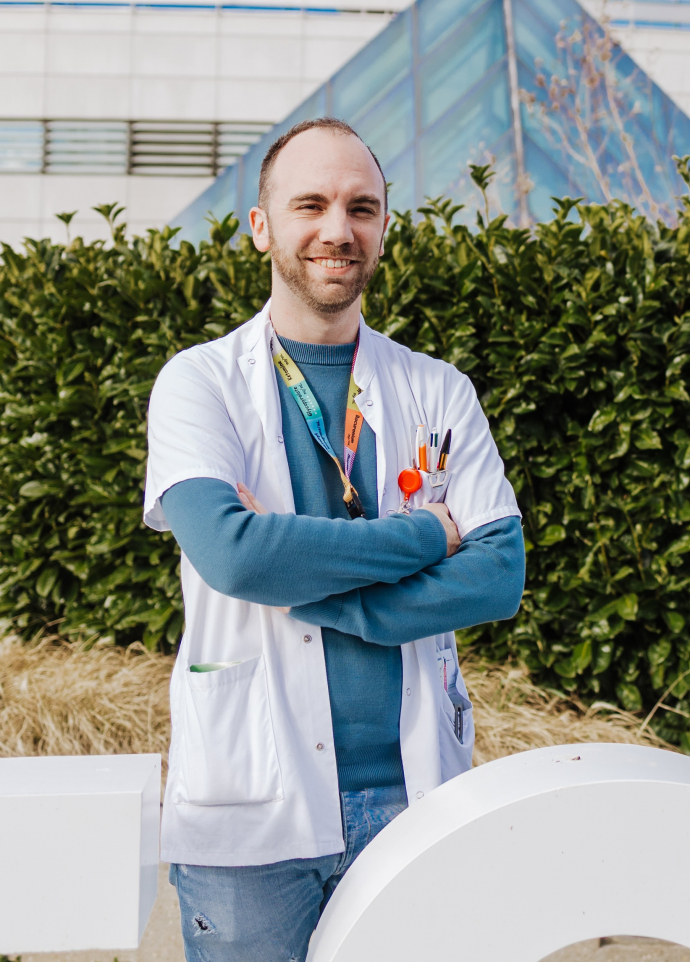
Testimony of Sullivan GERARD, Pain Resource Nurse:
“In 90% of our procedures in the operating room, we use virtual reality since distraction is enough to manage the induced pain. I initially offer a virtual reality headset if the procedure allows it, because patients are asking for non-pharmacological techniques; it allows us to offer something other than medication and to recreate a bond. MEOPA (nitrous oxide) remains a medication with side effects and contraindications, so we prefer to use virtual reality headsets. [...] We stay with the patient, we talk with them... it is a true relational care.”
Photo credit: Audace Studio
An innovation developed with the Centre Léon Bérard teams
The Oncolumeen project, deployed at the Centre Léon Bérard in 2024, was selected as the winner of the first call for projects dedicated to oncology supportive care, launched by Malakoff Humanis in partnership with AFSOS. This close collaboration (notably with Dr. Mastroianni, Prof. Gisèle Chvetzoff, and Christelle Galvez) allowed the adaptation of the Lumeen software and immersive experiences to better meet the needs of healthcare teams in curative and palliative care.
-
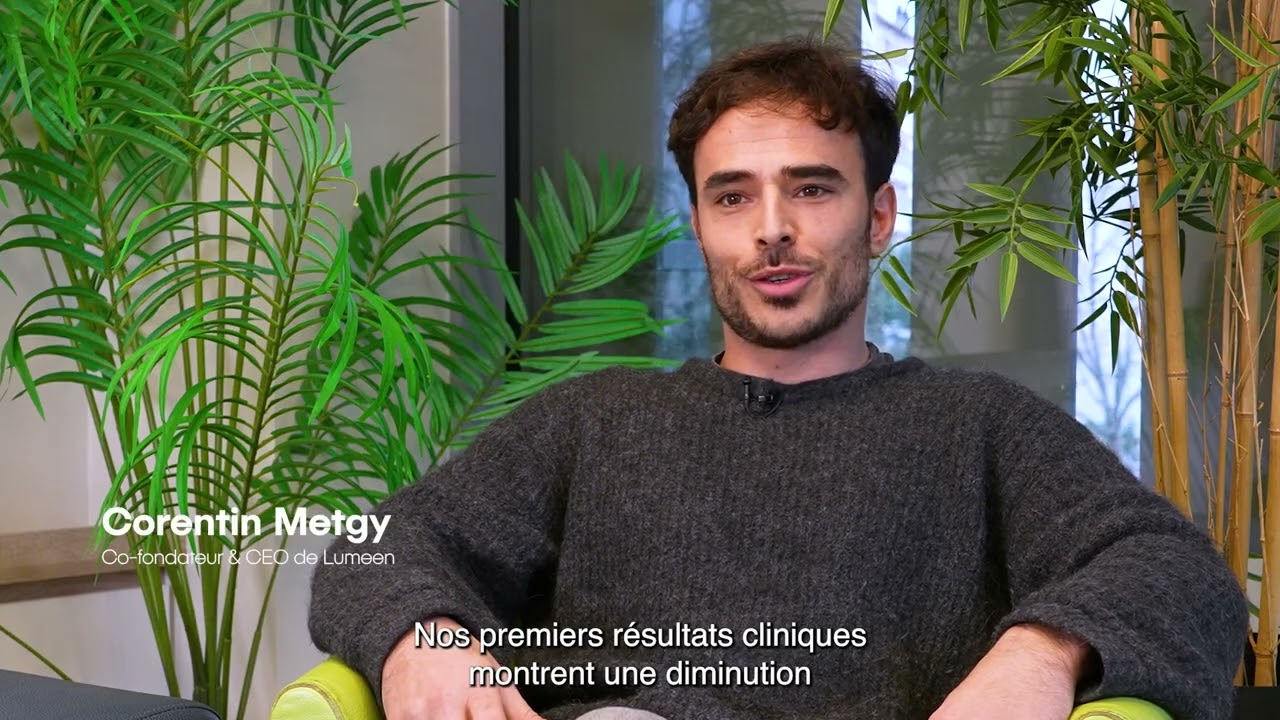 Vie de l'hopital
The Lumeen Project by Lumeen SAS, developed in collaboration with the Centre Léon Bérard
Presentation of the Lumeen project by Lumeen SAS, developed in collaboration with the Centre Léon Bérard, winner of the first call for projects dedicated to supportive care launched by Malakoff Humanis in partnership with AFSOS (Association Francophone des Soins Oncologiques de Support).